Going Morse
It was some time after express mail was being sent by train and horseback, when the question of how best to send messages, even quicker, via telegraph lines, was asked. The answer then, was, of course, Morse code, developed by Alfred Vail and Samuel Morse.
First telegraph
Their first message was biblical. "What hath God wrought?"1, quoted from Numbers 23:23. It was sent with American Morse in 1844, on the first long distance telegraph line, from Baltimore to Washington DC.
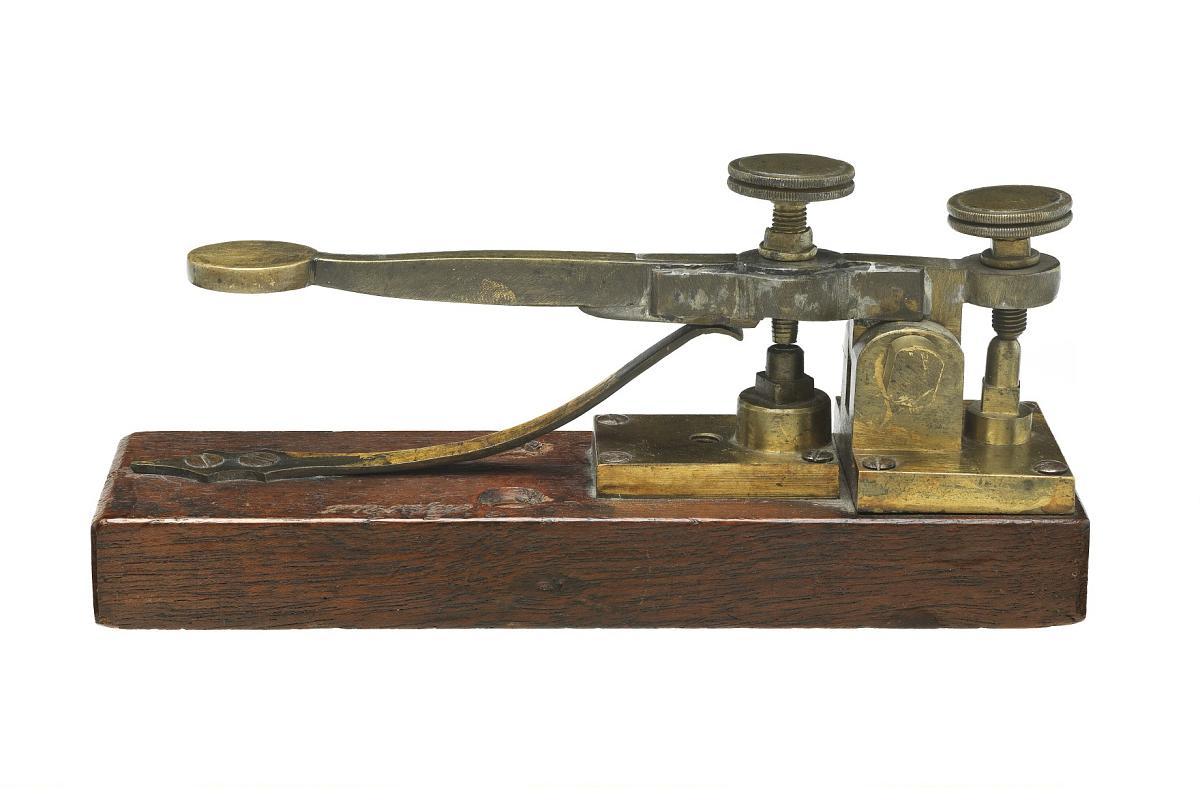
Below, is the Morse/Vail telegraph key from 1844. Also, the audio of the first telegragh, (if it had been sent in International Morse, with a continuous wave, or CW). American Morse was soon replaced by International Morse, when it was introduced in 1865.
Guglielmo Marconi
After the success of Morse on telegraph lines, Guglielmo Marconi eventually became the first to put Morse to commercial use on the radio. A famous example of his radio prowess, was when he turned on the Sydney city hall lights, wirelessly, in 1930, from his yacht in the Mediterranean, thousands of kilometres away.2
Today
Much like the yacht of Marconi, or other sailboats today, Morse Code continues to be a passion for many Amateur radio operators around the world. It is a mode of communication that consistently cuts through. It reaches across language, cultural, and geographic barriers, still, today.
References
- Smithsonian, copy of first telegram, Smithsonian
- 'Marconi Lights Sydney Town Hall From Yacht Off Italy', Trove, from the 27 Mar 1930 edition of The Register News